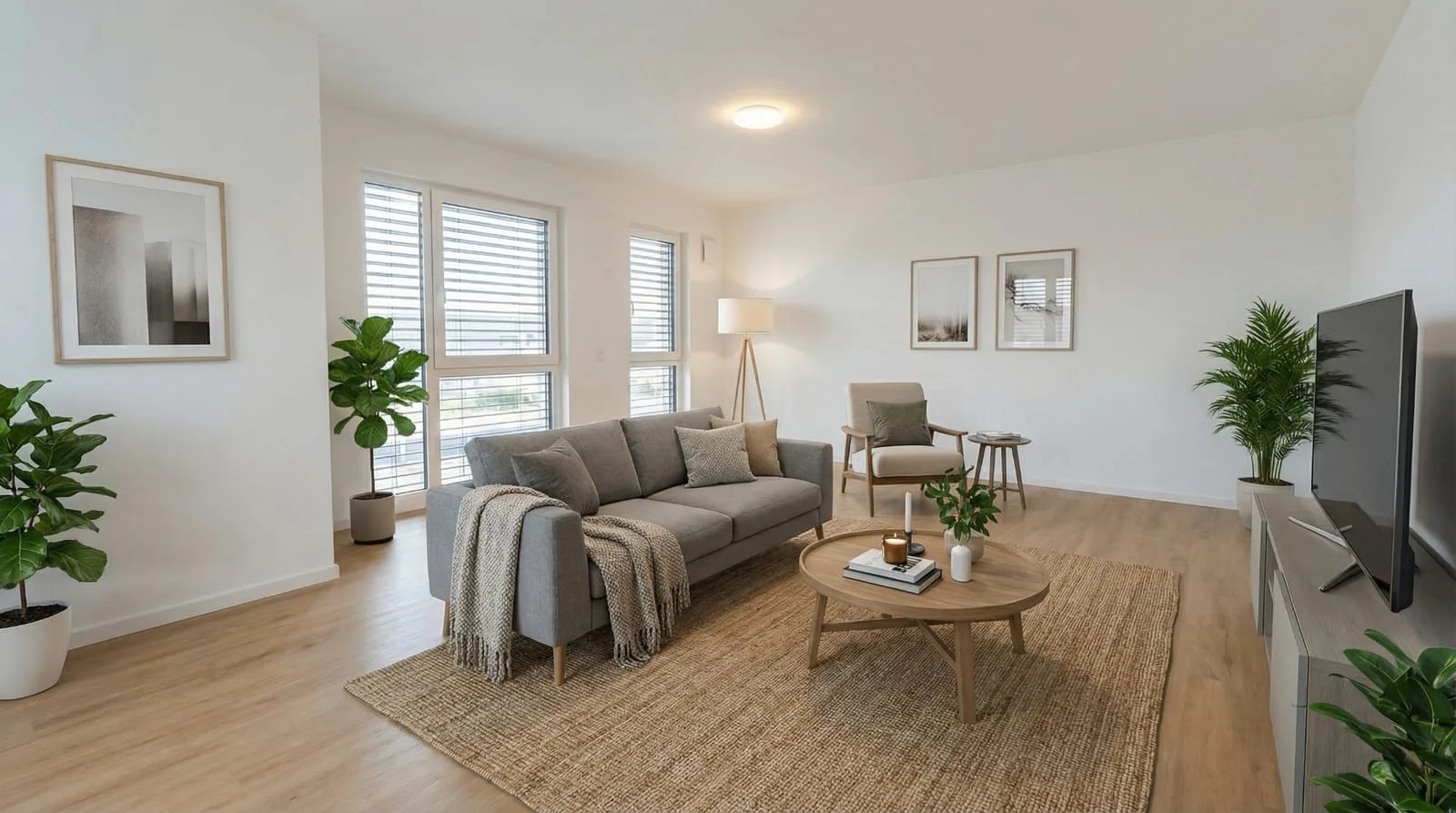
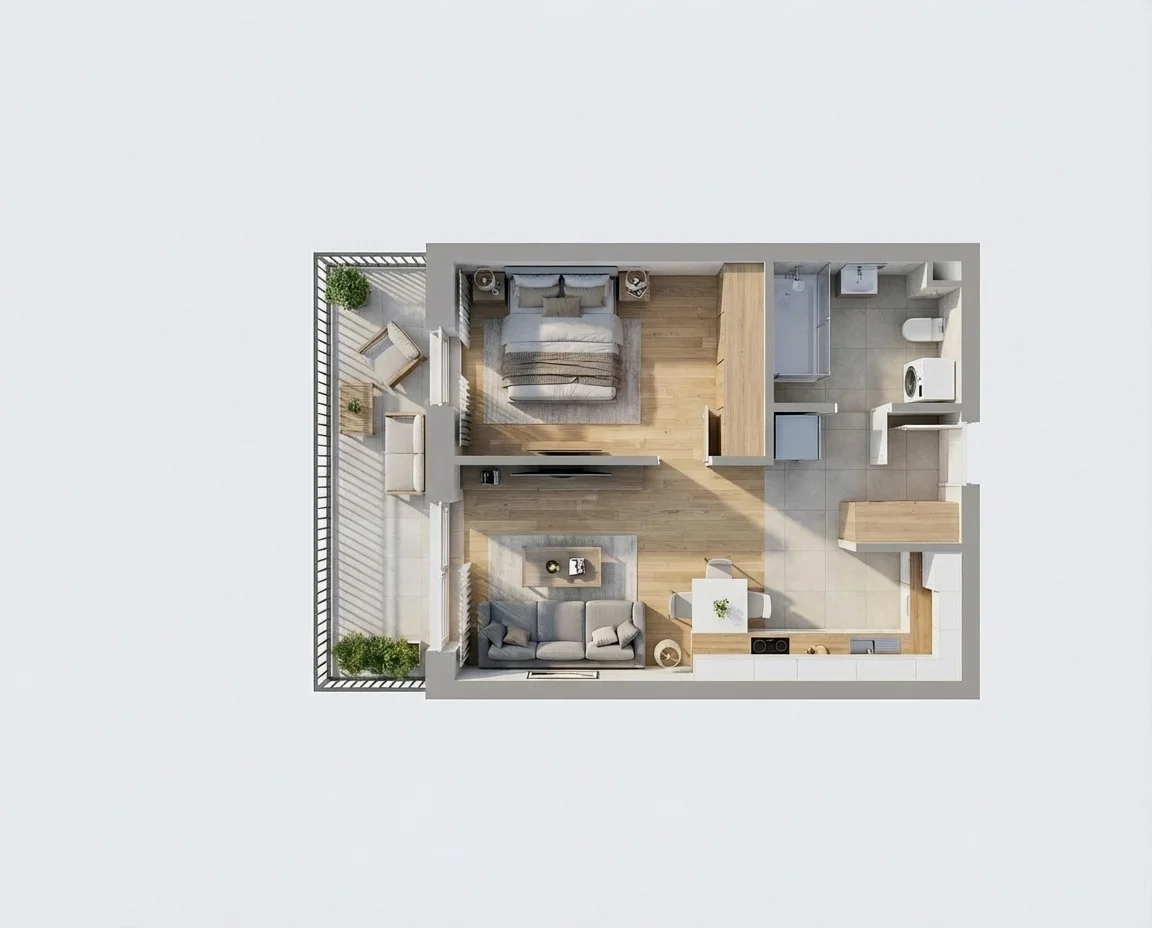
Virtual Renovation: How to Show Every Buyer a Property’s Potential
Older buildings, inherited properties, renovation cases - many listings are hard to sell because buyers cannot see the potential. Virtual renovation helps them visualize their future home.
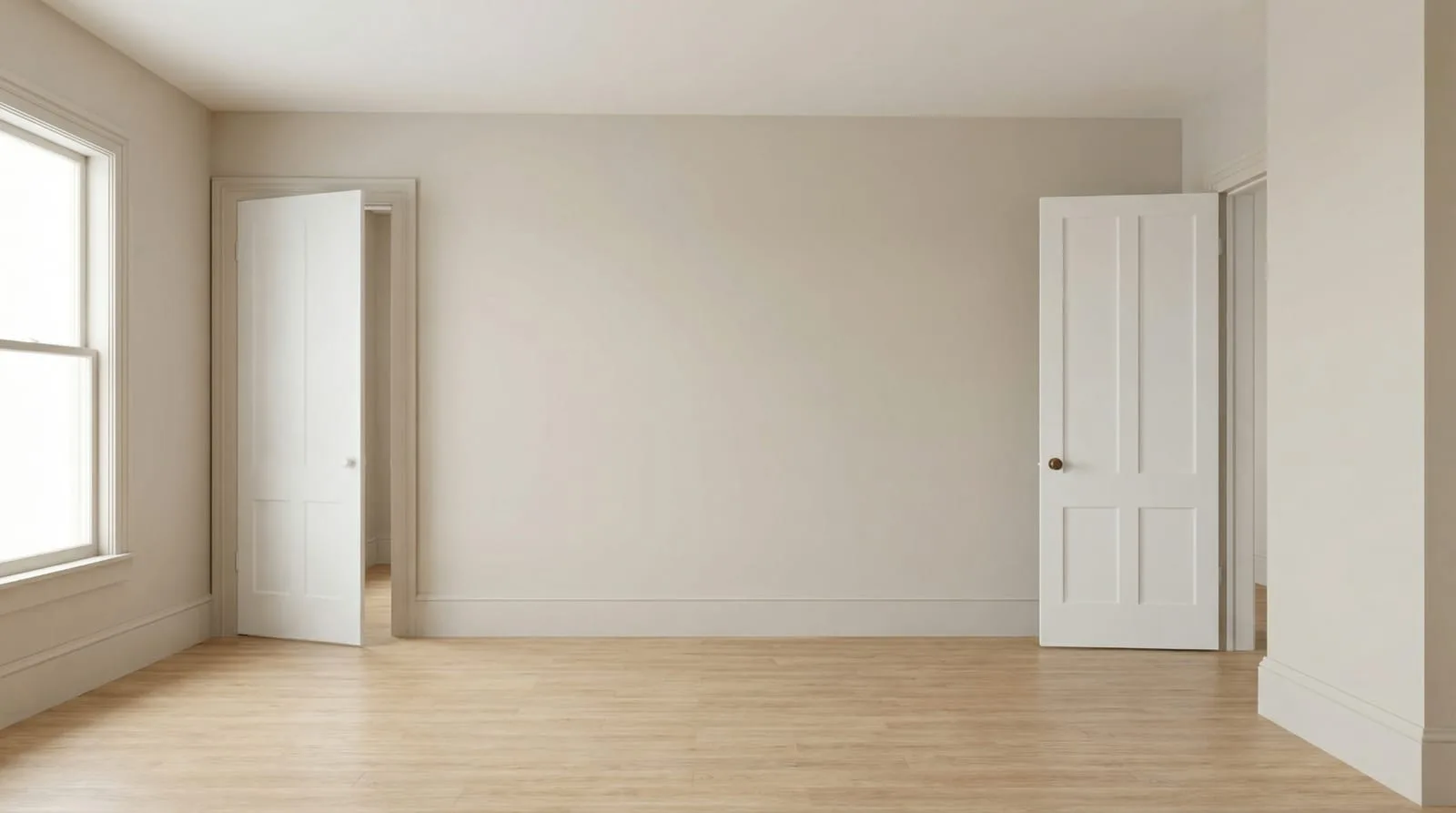 After
After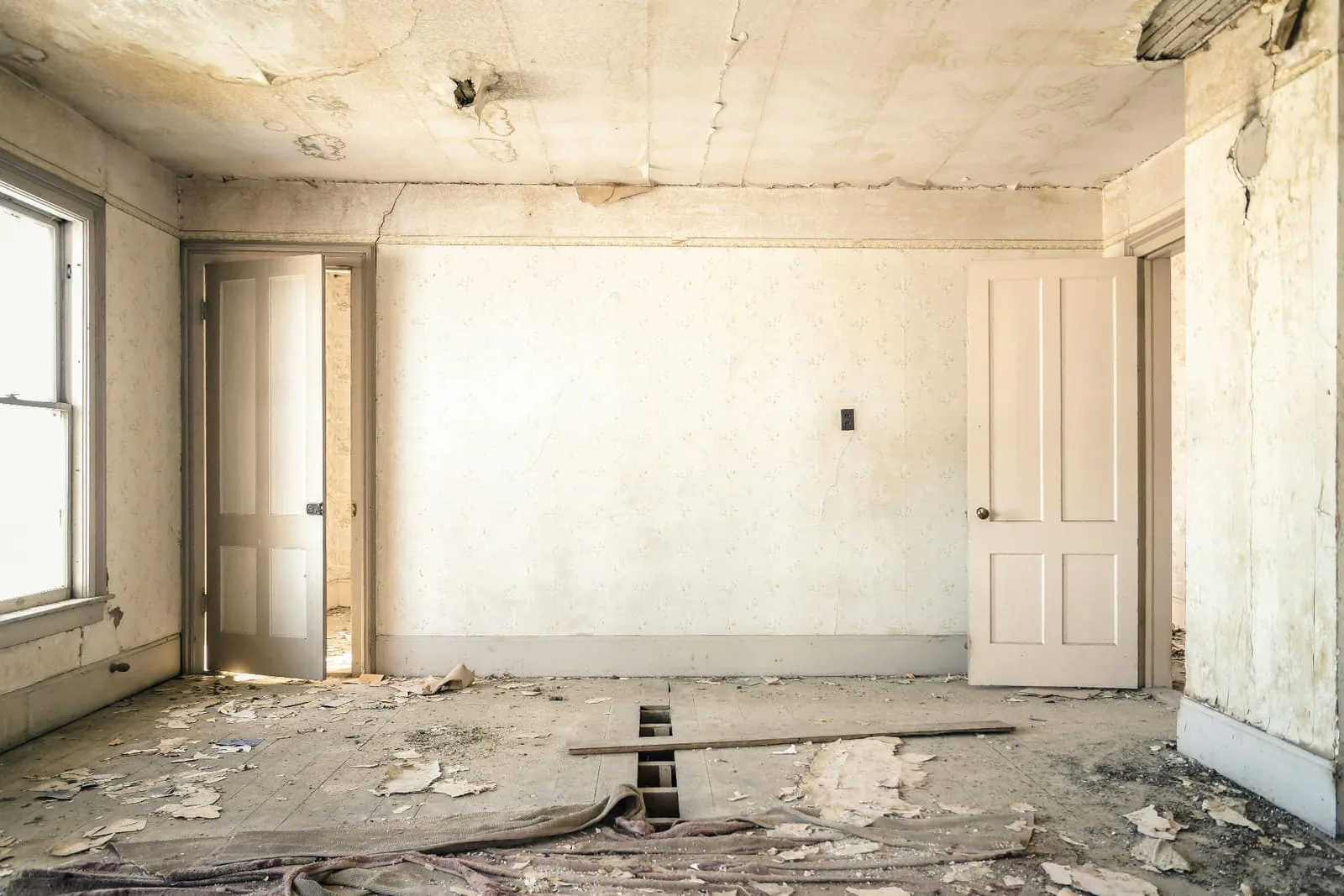 Before
Buyers do not buy properties - they buy the vision of how they will live there. Virtual renovation gives them that vision.
You know this scenario: great location, solid floor plan, fair price - but yellowed wallpaper, old carpet, and a 1980s bathroom. You take the first photos and already know what happens to viewing requests: limited. Most buyers skip the listing, not because it is bad, but because they cannot imagine the renovated version.
That is exactly where virtual renovation helps. In your listing, you show not only the current condition, but also a second version: how the property can look after renovation. Buyers who would have scrolled away now stay - because they can clearly see what is possible.
Why Imagination Is the Real Bottleneck
Most real estate buyers are not professional builders. They can read a floor plan, but mentally turning a yellow wall into clean white is difficult when they are scrolling through 50 other listings. The reality: the worse the visible condition, the smaller the group of buyers who can recognize the potential.
Virtual renovation closes this imagination gap. You deliver the finished vision instead of hoping for imagination. This is not deception - the original condition remains visible. But next to it, you show what is possible. The buyer decides which version they want to buy.
When Virtual Renovation Delivers the Biggest Impact
Three scenarios where the leverage is highest:
Older buildings with character but renovation backlog. Parquet under old carpet, high ceilings hidden behind dated wall finishes, strong room proportions behind poor visuals. Buyers see the carpet and move on. With virtual renovation, they see the restored floor and true room quality.
Inherited properties and post-move-out handovers. Interiors are often not just old, but personal - wallpaper, furniture, and lighting from another era. That creates emotional distance for buyers. A neutral renovated version helps them picture the home as their own.
Renovation properties with unclear target condition. In shell or stripped units, buyers have no orientation. Rooms feel empty and abstract. A virtual end-state preview turns a construction site into a concrete product.
Do you currently have a renovation-heavy listing in your portfolio? Show buyers what is possible
The Difference Between “Swap One Element” and “Rework the Entire Room”
Virtual renovation works on two levels - and choosing between them is strategic:
Replacing individual elements works when the room is generally fine but one detail is dragging it down. Example: good living room and daylight, but a 1990s orange carpet. Replace only the flooring with parquet, keep everything else. This feels realistic and credible.
Re-visualizing the entire room makes sense when a full renovation is needed or when you want to present multiple style directions. It is ideal for old bathrooms, full kitchen upgrades, or buyers comparing modern vs. classic finishes.
In practice, both approaches in parallel often work best: one subtle variant for realistic buyers, one ambitious variant for buyers with renovation budget.
Which Rooms Create the Strongest Effect
Not every room has equal impact in renovation previews. From our experience, three rooms matter most:
Kitchen and bathroom are deal-breakers. They strongly influence purchase decisions because they are expensive to renovate and central to daily life. Seeing current state and potential state side by side enables faster, more confident decisions.
Living room sells the lifestyle. This is less about technical features and more about whether buyers can imagine daily life there. A virtual renovation that updates walls, flooring, and lighting unlocks that projection.
Bedrooms and secondary rooms are usually lower priority - often fine with subtle element swaps or original-state presentation.
What Buyers Should See in a Listing
A proven formula: original photo, virtually renovated version, and a short note like “Renovation potential shown - original image above.” This transparency matters. Buyers appreciate honest communication when previews are clearly labeled.
For listing flow: start with original state (trust), follow with renovation preview (inspiration), then return to another original perspective. This rhythm between reality and possibility keeps readers engaged through the listing.
Ready to show your next renovation property from a second perspective?
With AIXpose, upload a property photo, choose between element-level replacement and full room renovation, and get your before/after quickly. Try Virtual Renovation now
If you regularly market renovation-heavy listings, see the package overview here: View pricing
Ready to Transform Your Listings?
Try AIXpose for free and see how AI-powered visuals can elevate your real estate business.
Get started free