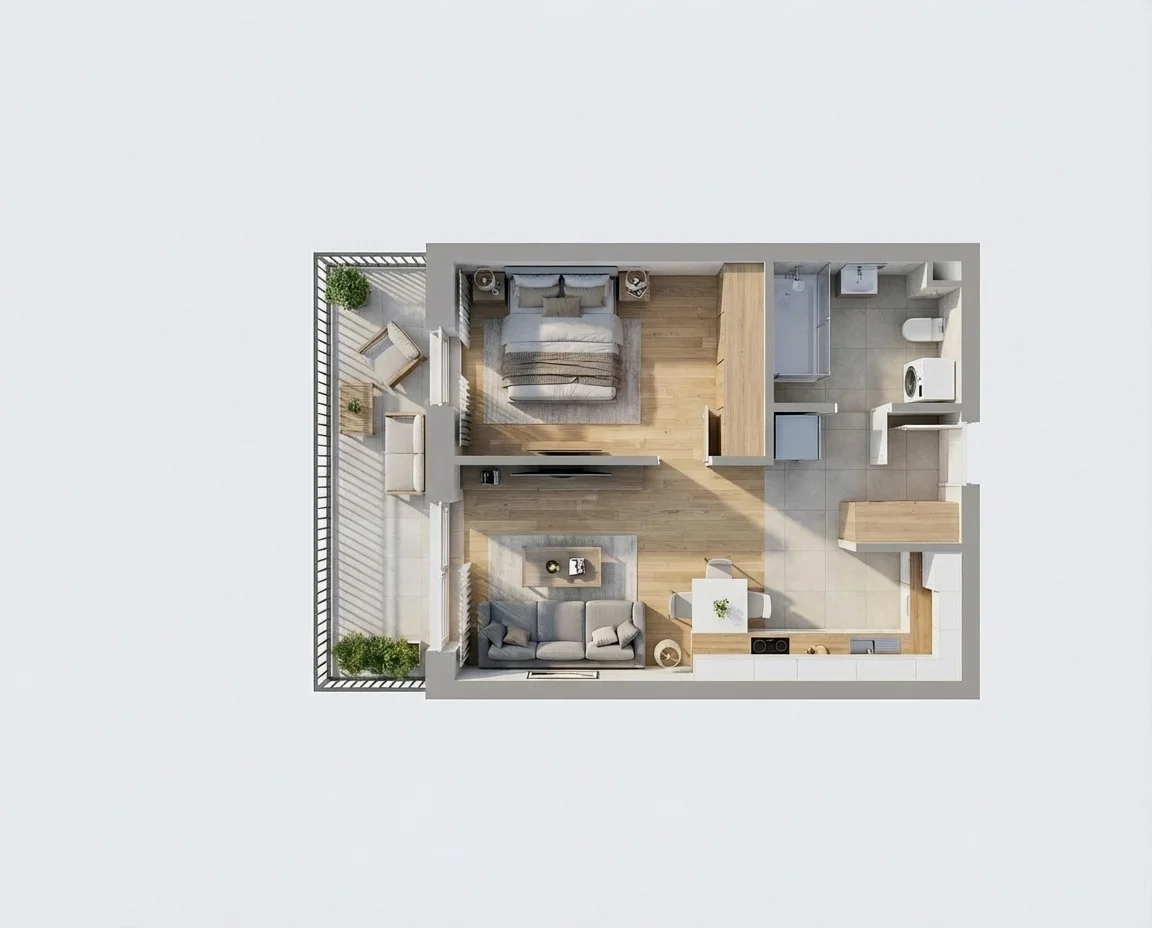
Virtual Staging: Process, Costs and When It Pays Off for Agents
Virtual staging explained: how digital furnishing works, what it costs and in which situations it brings agents measurably more inquiries.
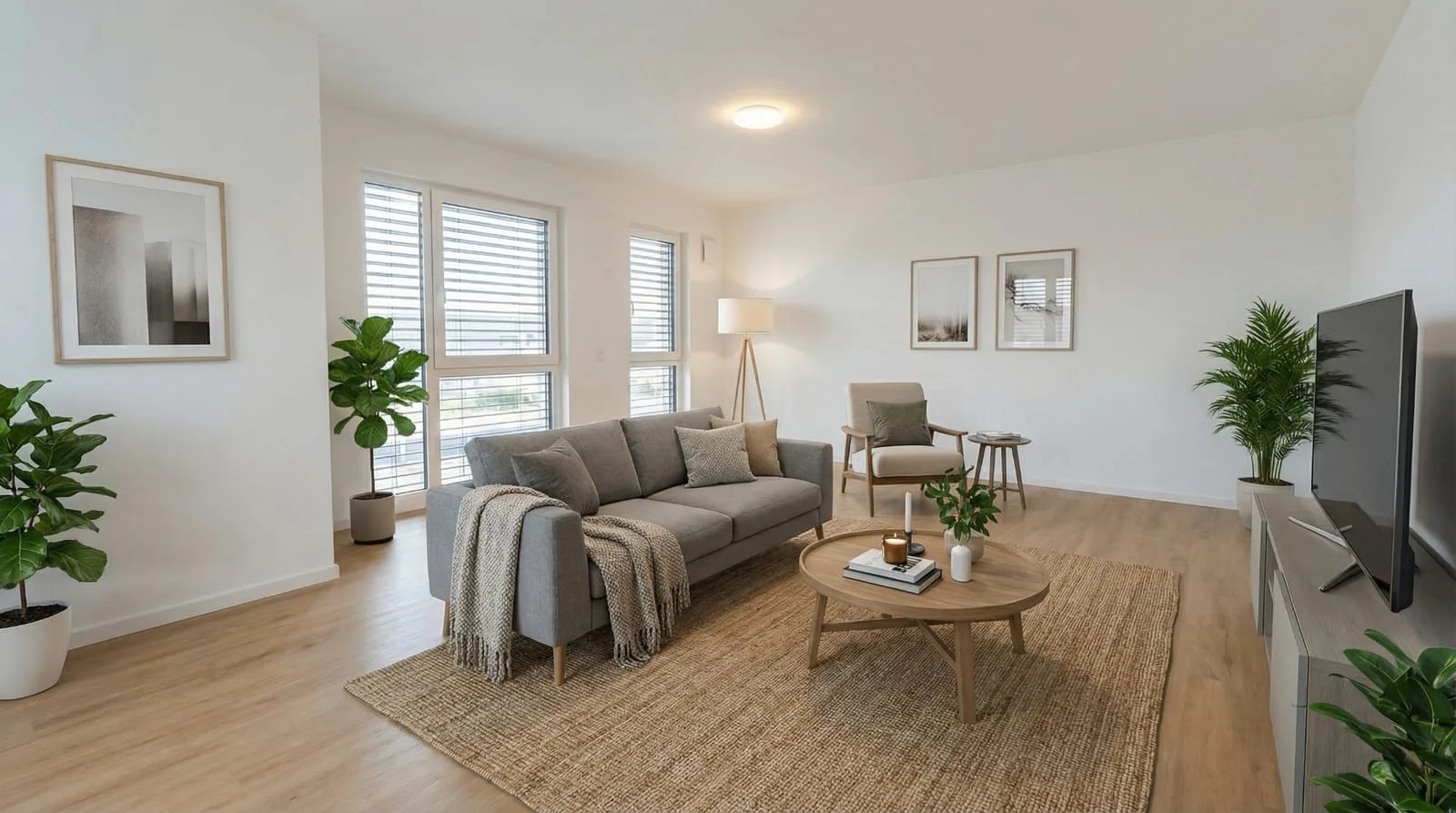 After
After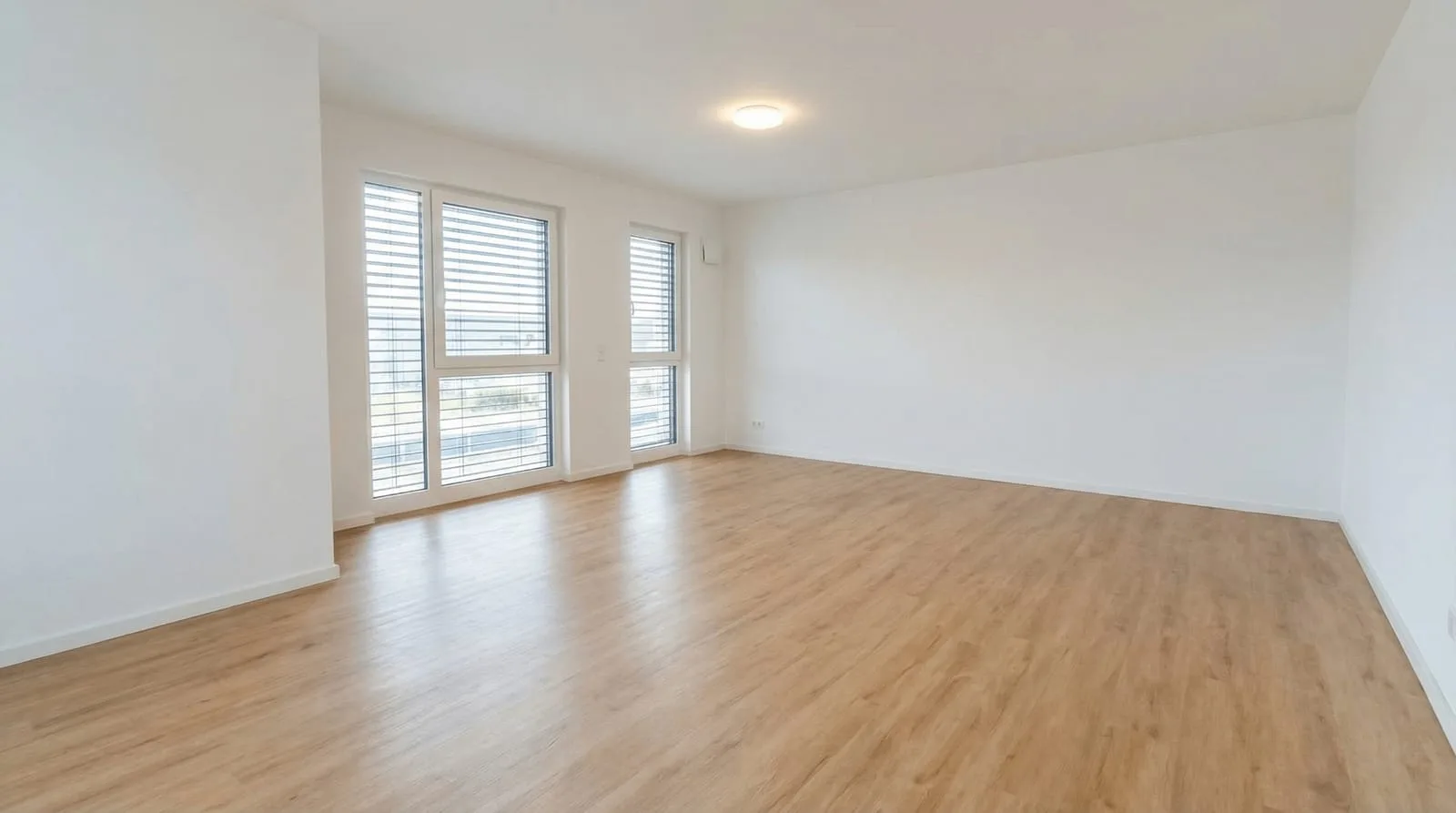 Before
An empty room is harder to sell than a furnished one. Virtual staging makes the potential visible - in minutes instead of days and at a fraction of the cost of real furniture.
Prospects find it hard to picture themselves inside four bare walls. This is exactly where virtual staging comes in: instead of renting, setting up and removing real furniture, the room is furnished digitally, right on the photo. This article shows the process, costs and limits, including a point that is often overlooked in Germany: correct disclosure.
What Is Virtual Staging?
Virtual staging (also called digital furnishing or digital home staging) refers to furnishing a room after the fact on an existing photo. An empty living room becomes a cozy, furnished space with a sofa, rug, plants and lighting, without a single piece of furniture ever being moved. A direct comparison with the traditional approach shows why it has caught on.
| Criterion | Physical Home Staging | Virtual Staging |
|---|---|---|
| Cost | high, often four figures per property | low, billed per image |
| Duration | several days | a few minutes |
| Effort | travel, setup and teardown, rental period | a single upload |
| Flexibility | one fixed look | multiple styles per room |
| Typical use | individual premium properties | broad, fast marketing |
How Virtual Staging Works
The process is deliberately kept simple so it fits into an agent’s daily routine.
A clean, ideally straight shot of the empty room is enough. Daylight and a wide angle help but are not a must.
The image is loaded onto the platform.
Modern, Scandinavian, classic or neutral. The style should match the property's target audience.
Within a few minutes the furnished image is ready, in multiple variants if needed.
What matters is that the perspective and lighting of the original are preserved. Good virtual staging inserts furniture so that shadows and room lines are correct. That is exactly what sets a convincing result apart from a tacked-on collage.
When Does Virtual Staging Pay Off, and When Not?
Being honest pays off, so here are both sides at a glance.
Especially useful for
- vacant apartments and houses
- properties after a tenant change that need to go back on the market quickly
- new builds that are not yet furnished
- rooms with an unusual layout whose potential is unclear
Less useful for
- properties that are already attractively furnished
- shots with poor image quality
- properties where the structural condition is the selling point
The Point Many Overlook: Disclosure
Conclusion
Virtual staging is not a trick but a tool to make a property’s potential visible. Done right and properly disclosed, it increases the number of qualified inquiries, because prospects can finally picture how they would live in the space.
See the result on your own property. Upload a photo of an empty room and get a free sample before you decide. Learn more about the workflow on the Virtual Staging product page or in the pricing overview.
Ready to Transform Your Listings?
Try AIXpose for free and see how AI-powered visuals can elevate your real estate business.
Get started free